Our story
From sketch to block.
Common Block grows out of a block and production line we have already designed and run. Here is how it came together, and where we are now.
Track record
We've built this before.
Our team has already designed an EPS-cement block and the line that makes it, from grinding foam to casting, curing and delivery. Those blocks are in homes today.
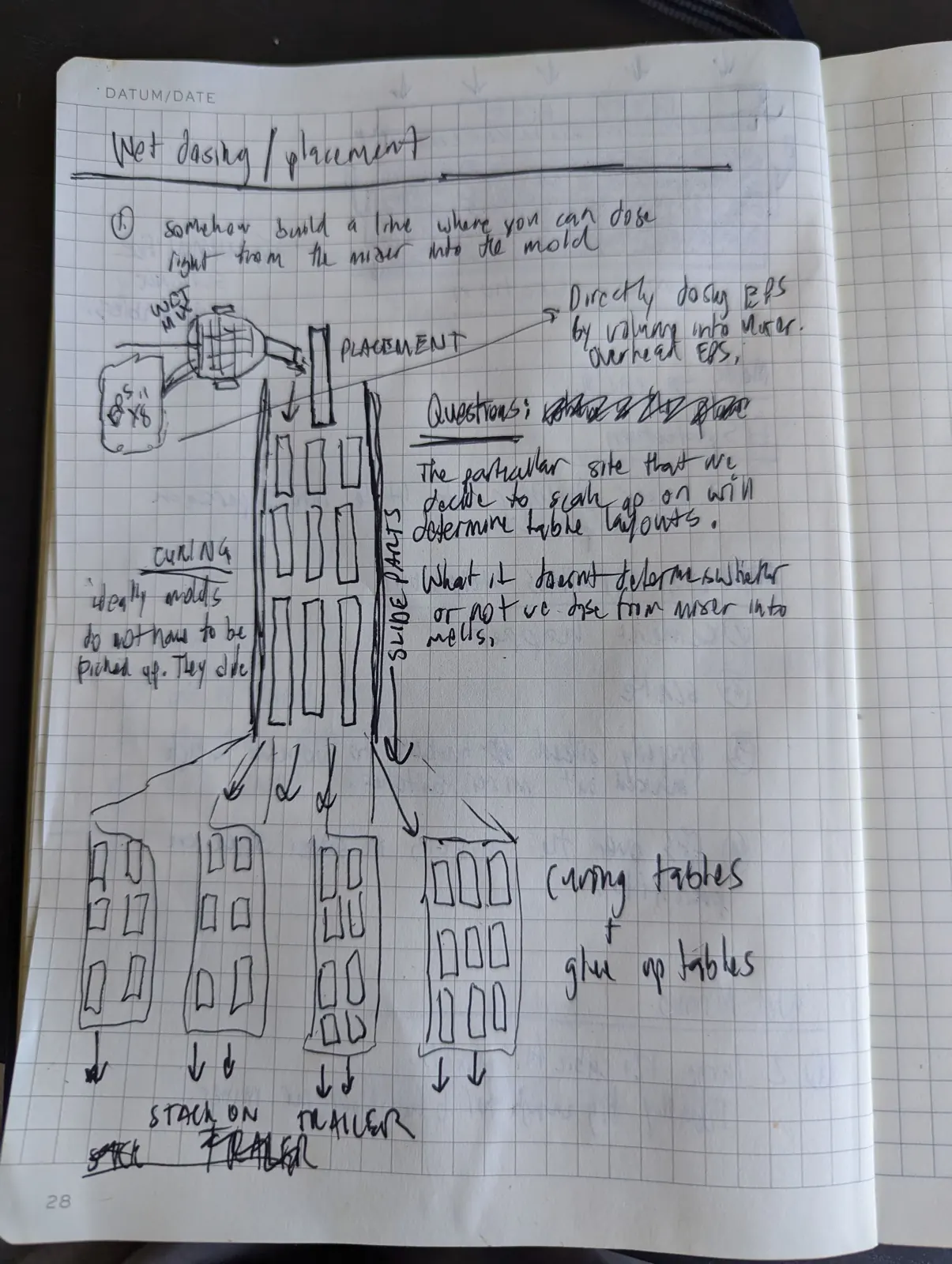
Sketching the line 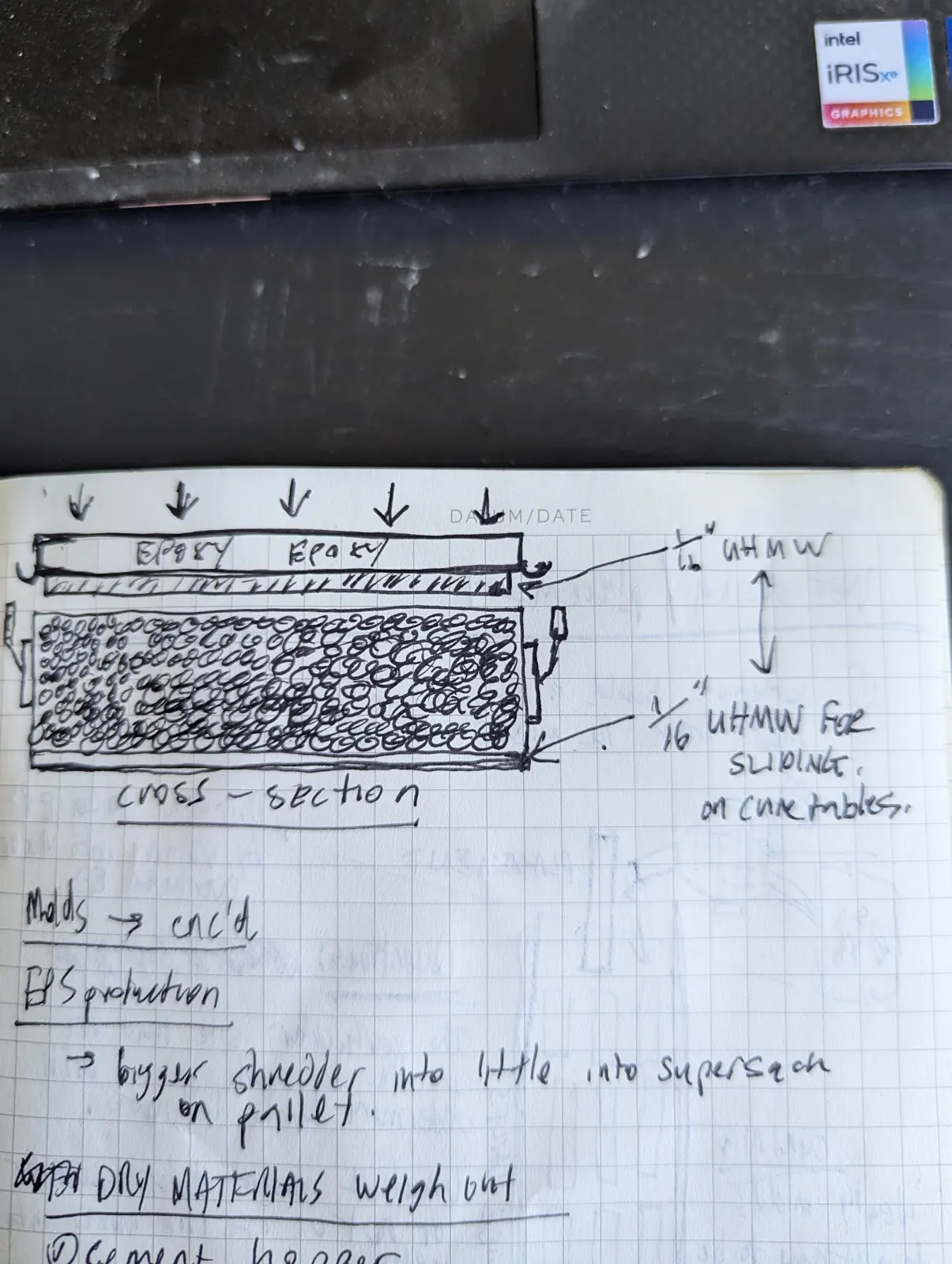
Designing the mold 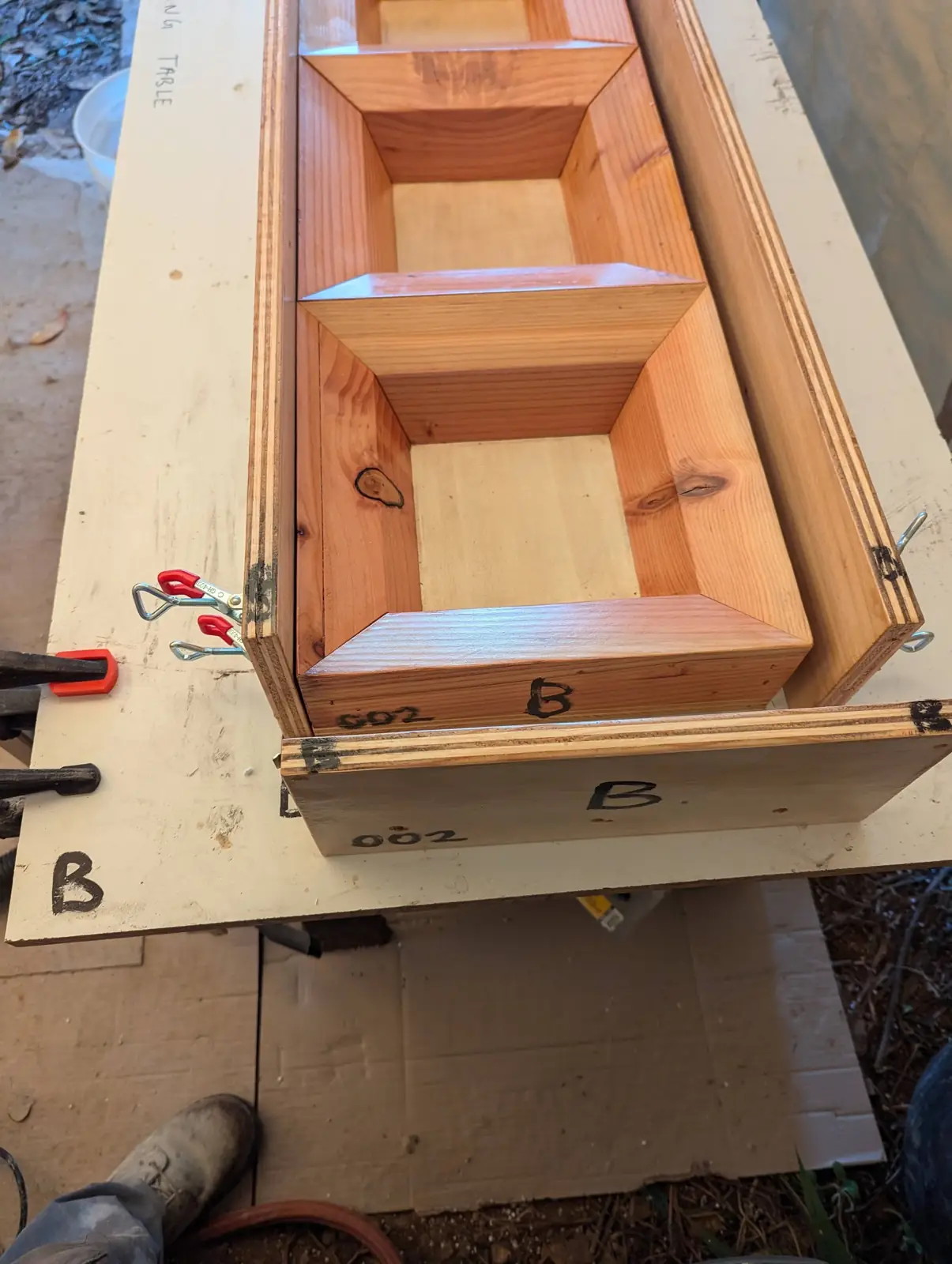
The mold 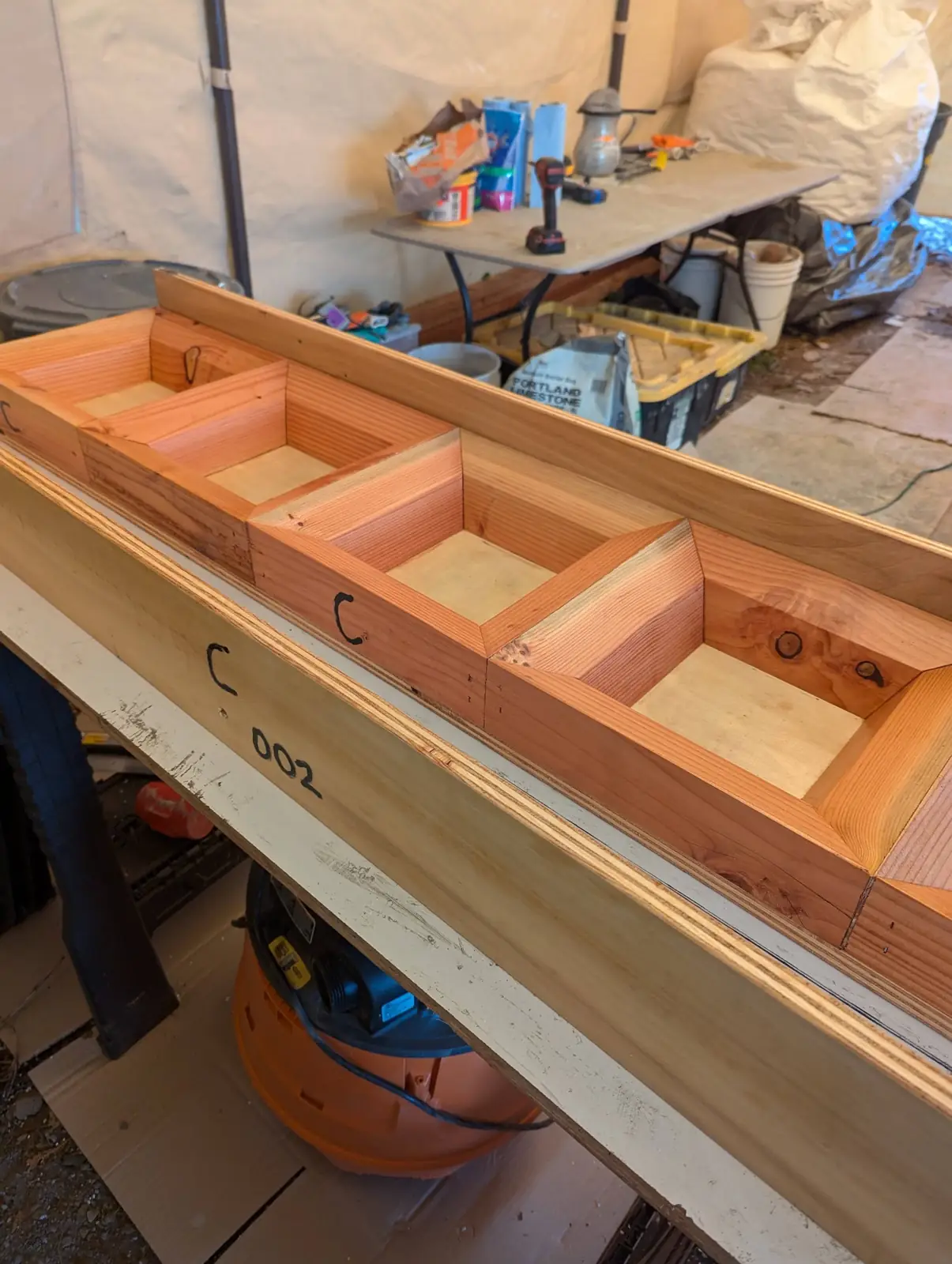
Molds ready to cast 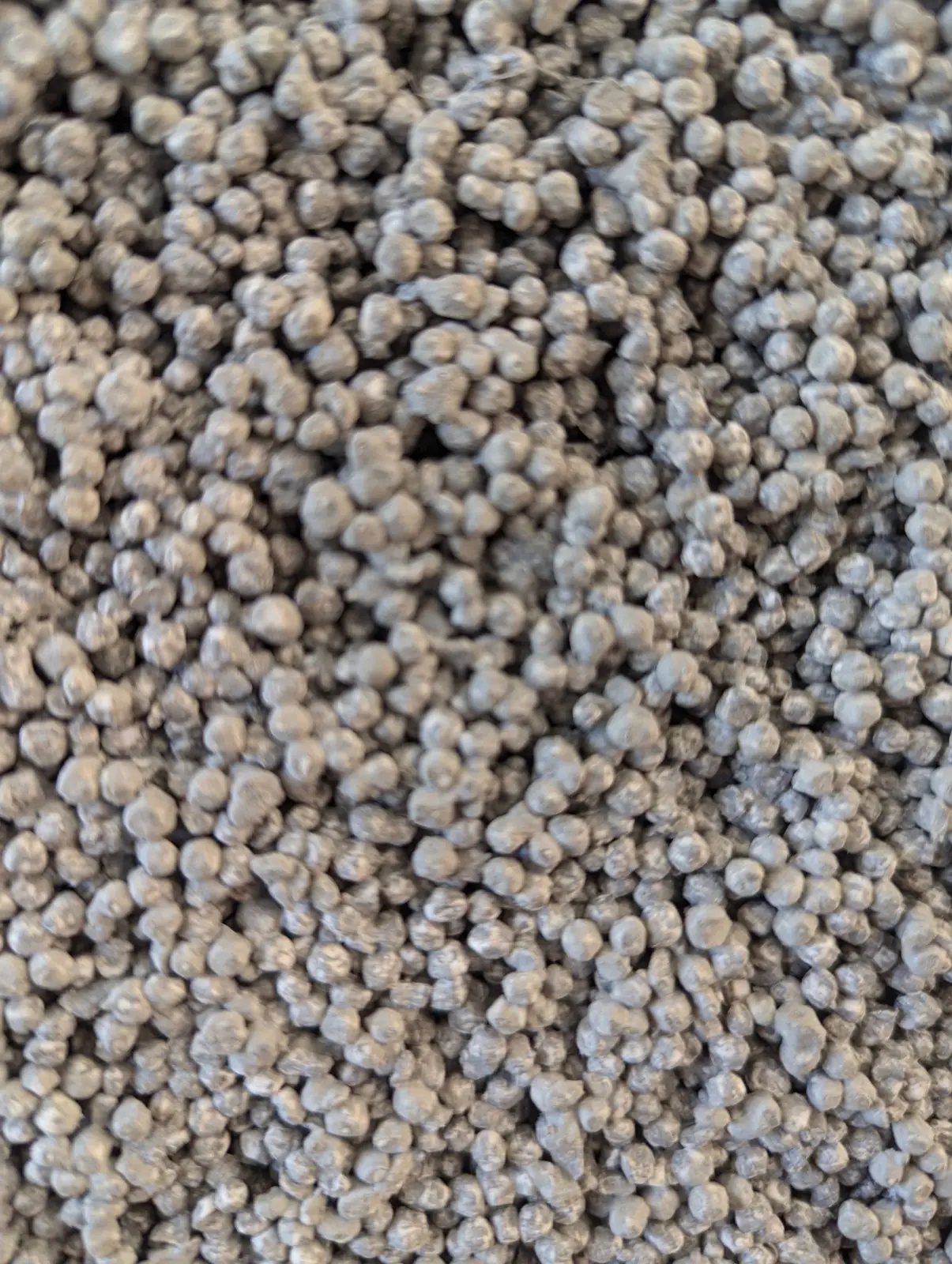
Ground foam beads 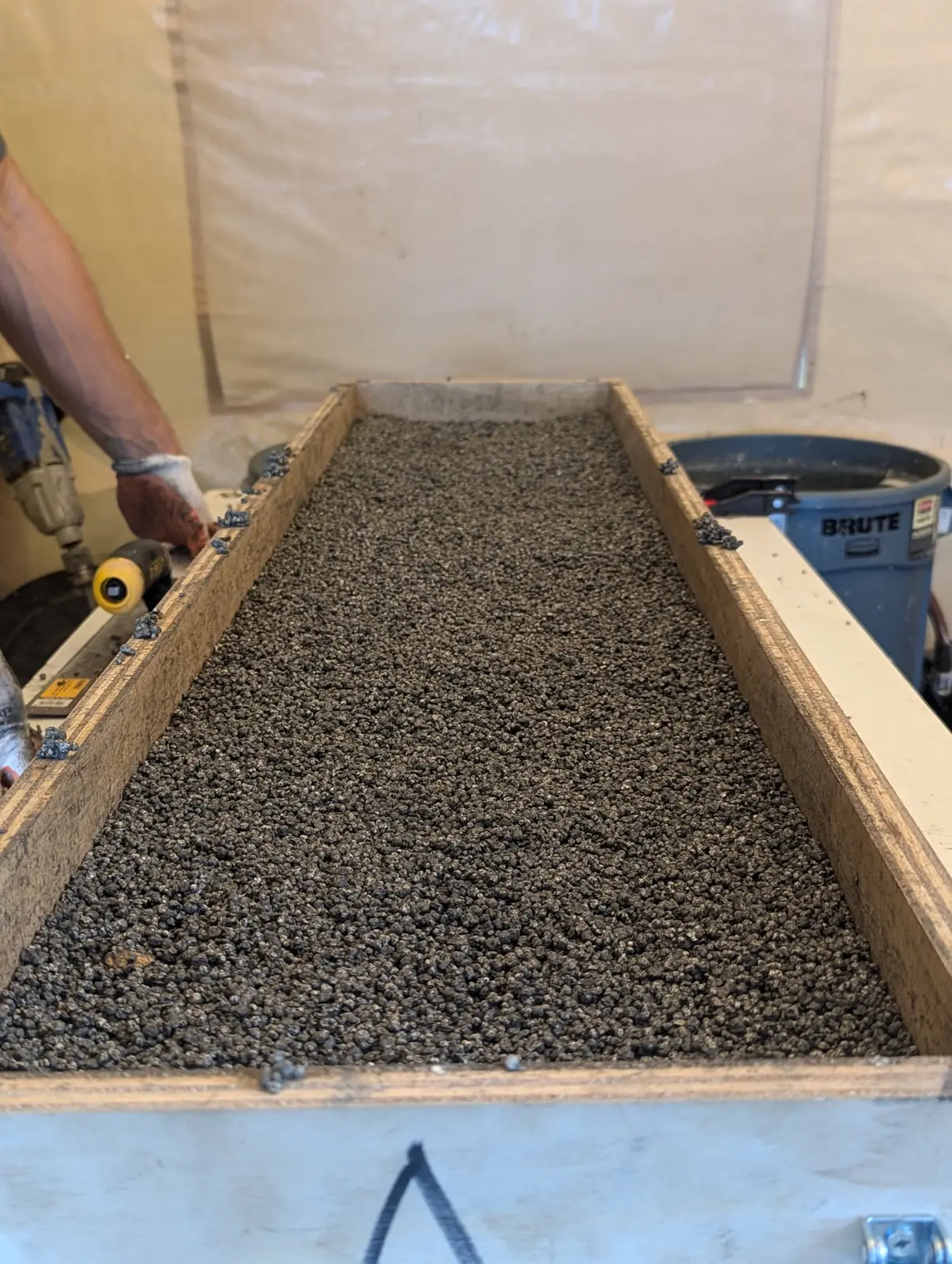
Casting 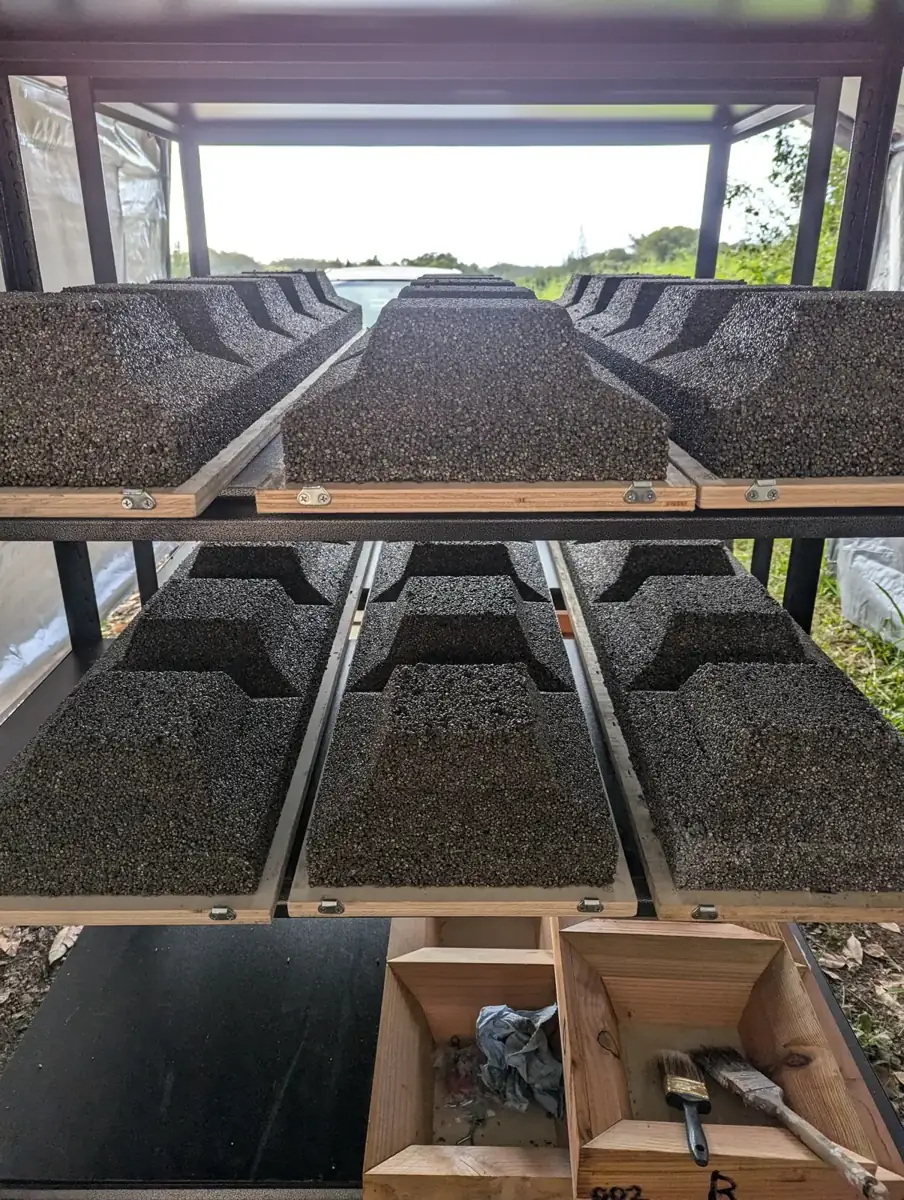
Curing 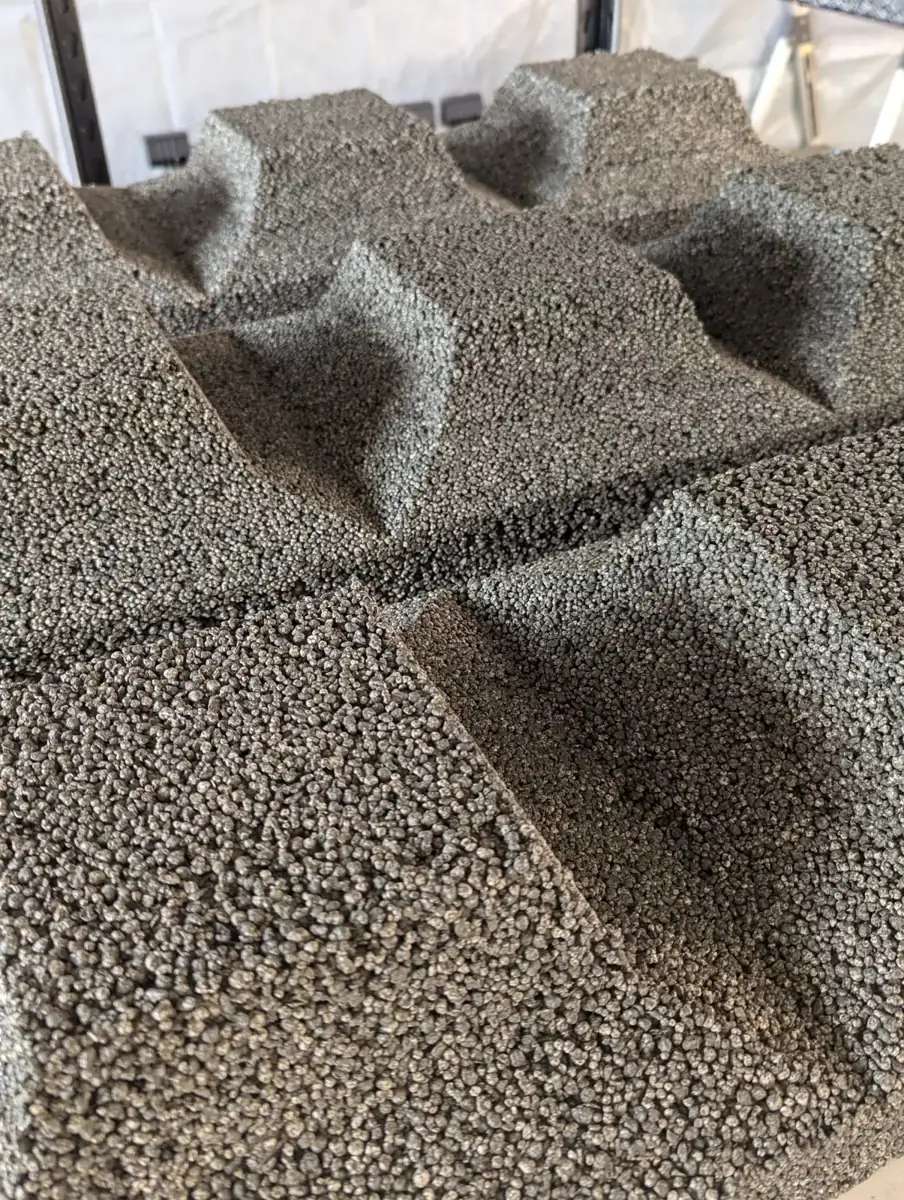
Out of the mold 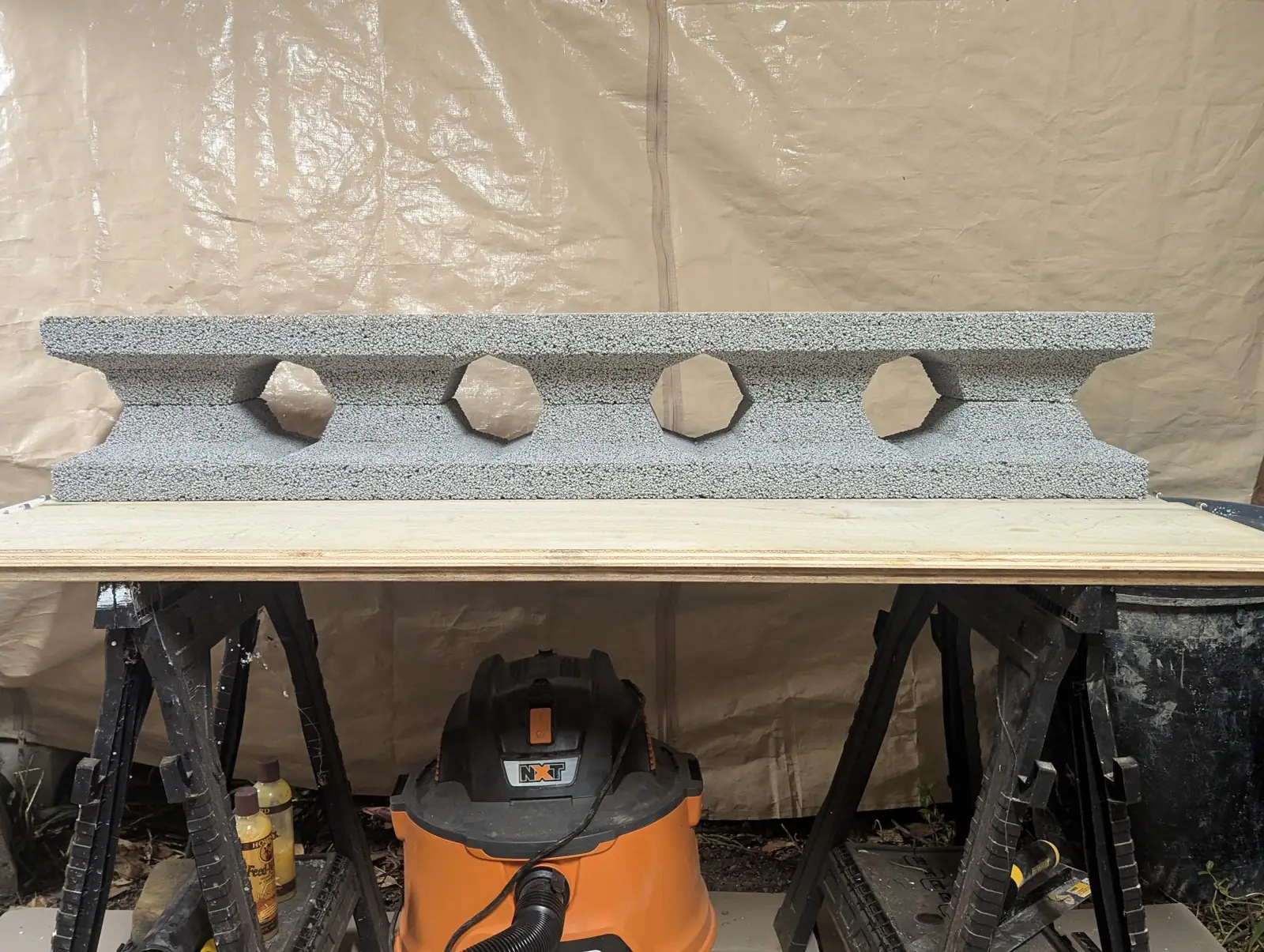
A finished block 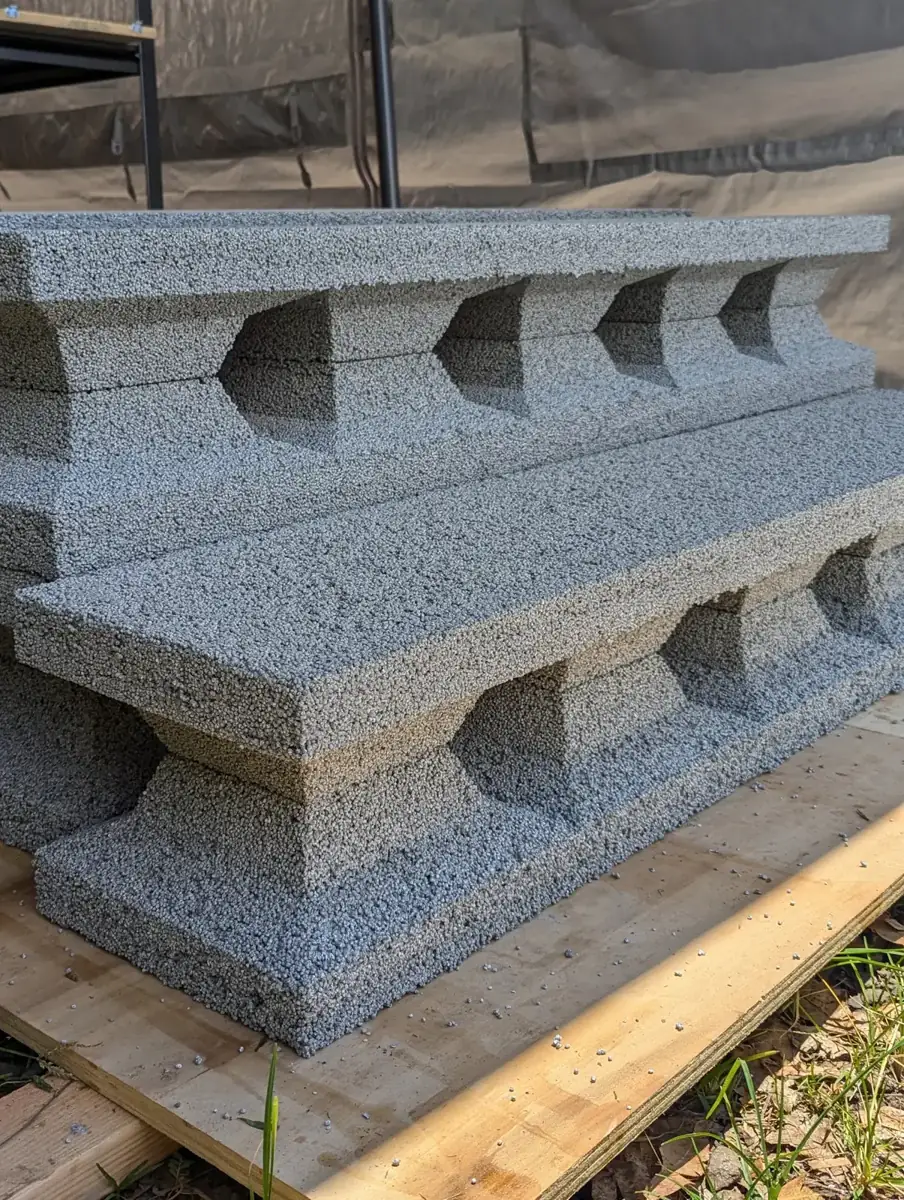
Stacked and inspected 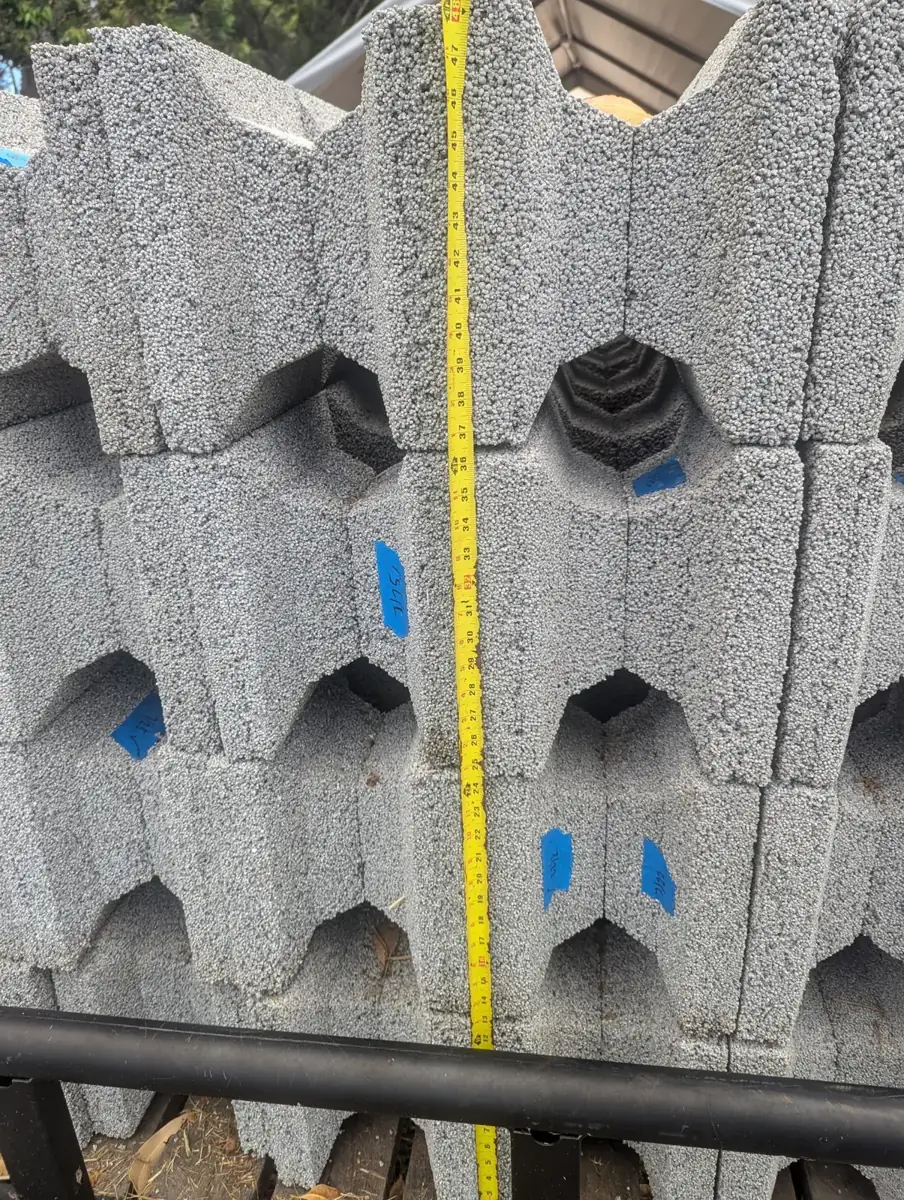
Checking dimensions 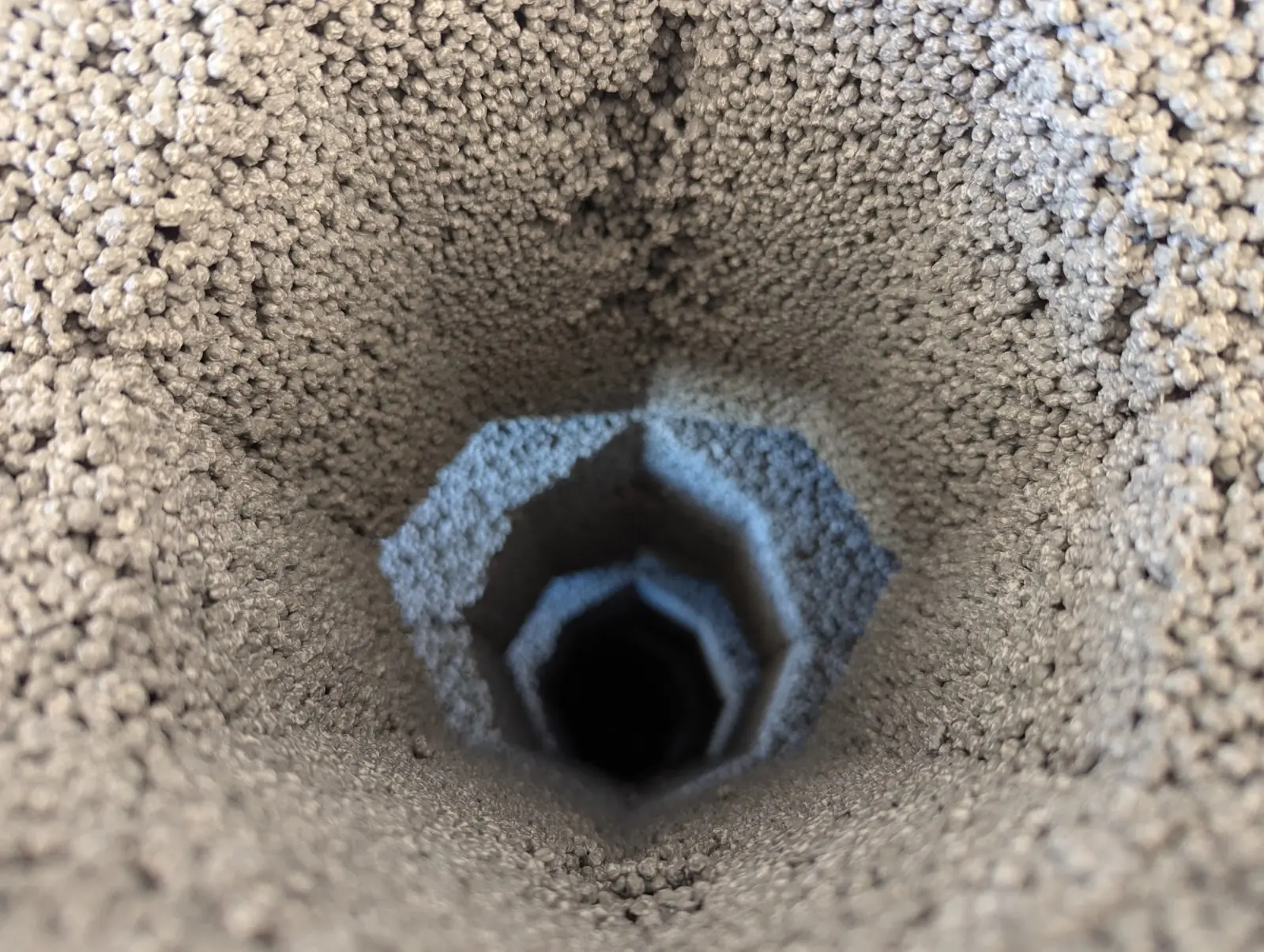
The core, ready for rebar 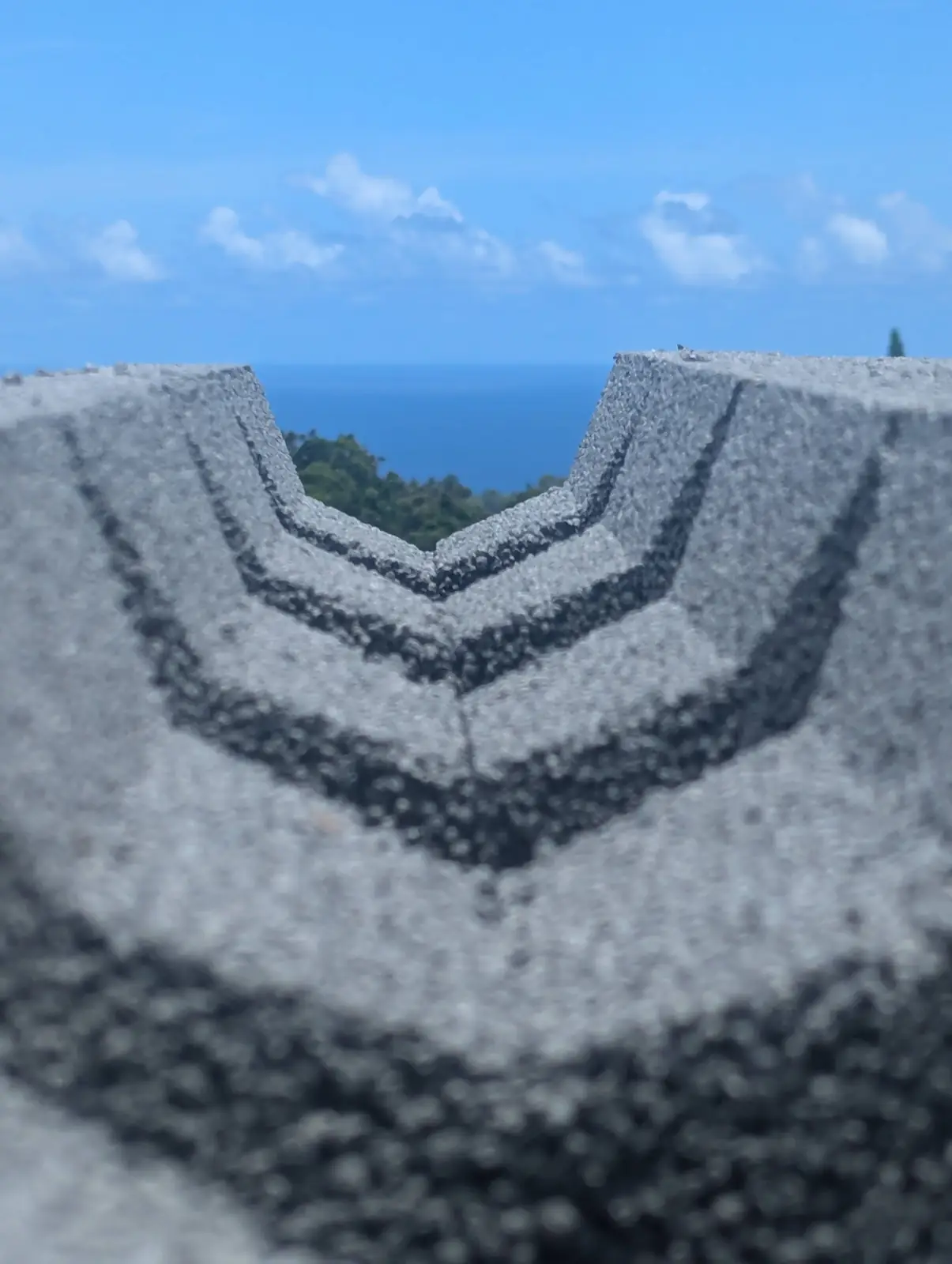
Course over course 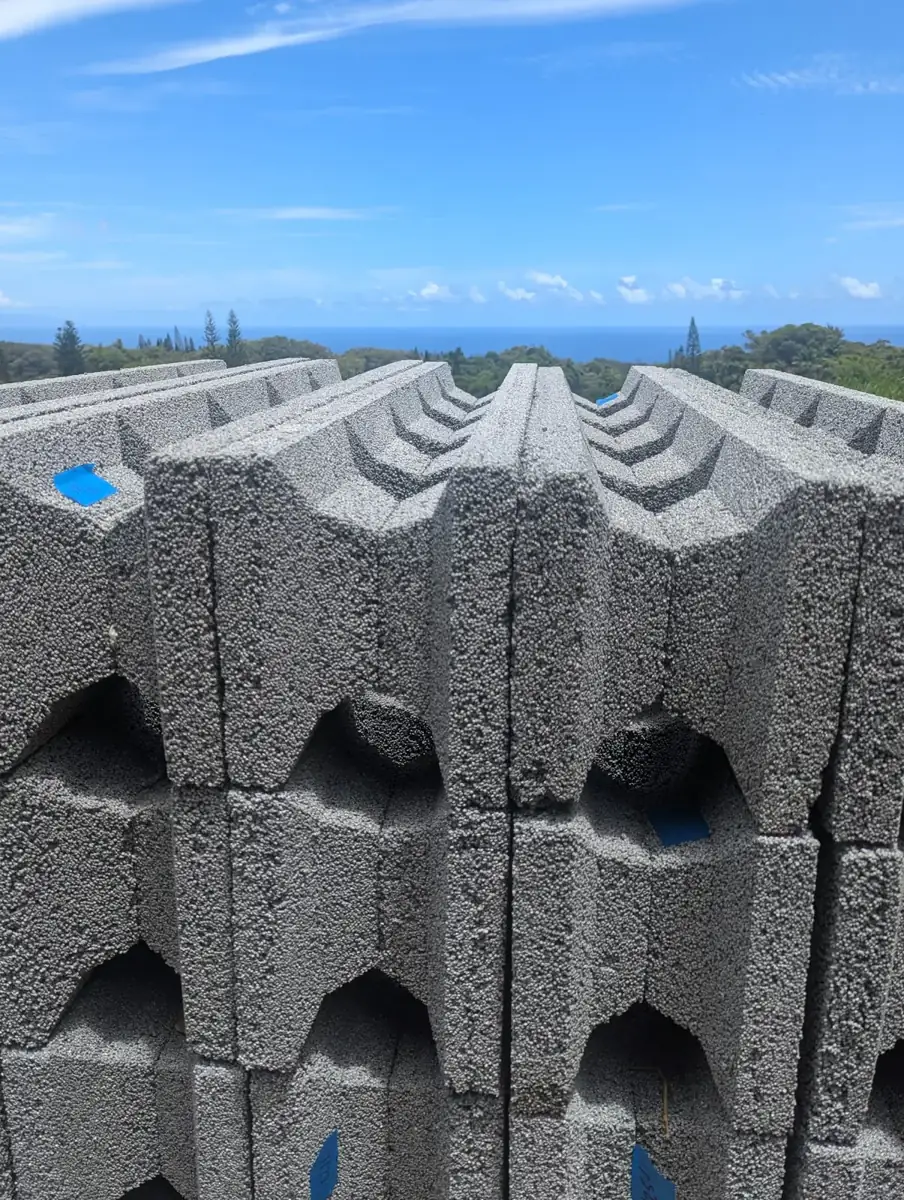
Ready to build 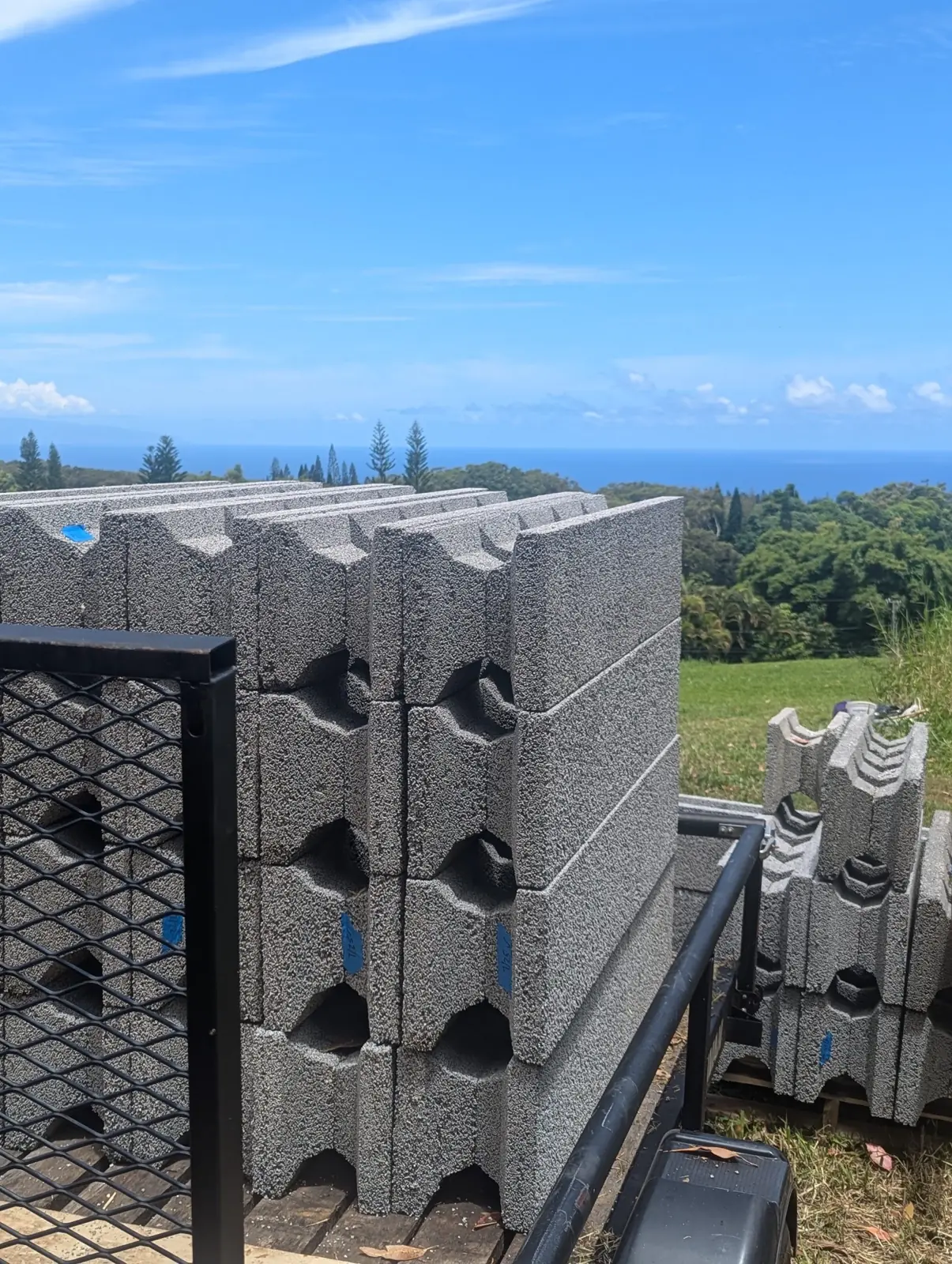
Out for delivery
Where it started
The Surf Block chapter.
- Where
- Maui, Hawaii
- Feedstock
- Surfboard foam offcuts
- Our role
- Mix, manufacturing process and first pilot plant
- Pilot plant
- 40–50 blocks per day
In the press: Dezeen · Honolulu Magazine · Material District
On Maui, Surf Block set out to turn the foam left over from shaping surfboards into insulated concrete building blocks. The company was founded by architect David Sellers, and its blocks are made from roughly 85% recycled EPS foam.
Our team helped get it off the ground. We helped design the mix and the manufacturing process, from grinding the foam to mixing, casting, curing and delivery, and helped build the first pilot plant, which can make 40–50 blocks a day. The sketches and photos above come from that work.
It proved the idea on an island, where waste and building materials are both hard to move. Common Block takes what we learned there to Middle Tennessee, with a much bigger waste stream and a city already collecting it.
Where we are
We're not making blocks yet. Here's how we get there.
Common Block is at the starting line. The hard parts we can do ourselves are done: we know how to make this block and how to run the line that makes it. What we can't do alone is put it all in place in Nashville. That's where local support comes in.
- Done
The plan and the know-how
- Block mix and production process designed and proven on a previous ICCF line
- Block design and dimensions set: 5 ft, hexagonal cores
- Business plan and equipment list for a Nashville plant
- Now
Building local support
- A production space in or near Nashville
- Clean foam supply from retailers, distributors and city collection
- Startup funding, grants and green-building incentives
- Builders, architects and community partners for the first projects
- Next
First blocks, first walls
- Set up the line and cast the first Nashville blocks
- Independent fire, thermal and code testing (ASTM E119, C1363, ICC-ES)
- Pilot walls with local builders, documented start to finish